|
| “It is encouraging that we are about to make an agreement that will ensure and strengthen the security of Greenland.” — Danish Prime Minister Mette Frederiksen, September 18 statement |
|
|
Good afternoon! The United States, Denmark, and Greenland are expected to sign a new Arctic security agreement Tuesday during the United Nations General Assembly. President Donald Trump calls it permanent American control. Denmark and Greenland describe a NATO security arrangement that preserves sovereignty and self-determination. The text is still unpublished, so today’s Free Game separates the reported terms from the political branding.
Also this morning: Washington has proposed an AI-incident warning system in talks with China, world leaders are gathering in New York with war, energy prices, climate shocks, and artificial intelligence crowding the agenda, and Friday’s market close left the Nasdaq higher while the Dow slipped. A Different World is returning to Hillman, and Grandmaster Flash’s new history of hip-hop arrives tomorrow. Let’s get into it.
|
|
FREE GAME OF THE DAY
What the Greenland Security Deal Changes, and What It Does Not
 Photo by Peter Platou on Pexels · Pexels License A new agreement among the United States, Denmark, and Greenland is scheduled to be signed Tuesday on the sidelines of the United Nations General Assembly, according to Monday reporting. The pact is intended to expand Arctic security cooperation and the American military presence in Greenland while keeping the island within the Kingdom of Denmark.
Trump has described the arrangement much more broadly. He said it gives the United States permanent control over Greenland’s security and other American needs. On Sunday, he followed that announcement with a Truth Social image labeled “His Hemisphere,” keeping his territorial rhetoric alive even as the governments involved described a narrower NATO agreement.
The reported provisions would bar non-NATO countries from establishing bases in Greenland and restrict sensitive investments by adversarial powers. Independent reporting says China and Russia would be prevented from establishing bases, while the United States would gain room to expand military infrastructure. The public descriptions do not establish American ownership of Greenland.
Denmark’s government says the agreement recognizes the sovereignty and territorial integrity of Greenland and Denmark and protects Greenlanders’ right to self-determination. Reporting on the negotiations also indicates that Washington would not receive a veto over Greenlandic decisions. Those distinctions matter because control over security policy is different from control over a territory or its people.
The United States already possesses broad military rights in Greenland under a defense agreement dating to 1951 and operates Pituffik Space Base there. The practical question is therefore what new authority, funding, construction, and investment screening the 2026 pact adds. Until the signed text is public, claims about its full reach should be treated as political characterization rather than settled terms.
The business stakes extend beyond military bases. Greenland sits at the center of competition over Arctic shipping routes, surveillance infrastructure, energy security, and critical minerals. Contractors and investors may see opportunity, but the durable rules will depend on who approves projects, which investments count as sensitive, how costs are divided, and how Greenland exercises its own authority.
Free Game Takeaway: Free Game Takeaway: Read the signed text, not only the victory announcement. Watch four details when the agreement becomes public: who can approve new bases, who pays for construction, which investments can be blocked, and whether Greenland retains final authority over land and development. Those provisions will reveal whether this is a major transfer of power or a formal expansion of security rights the United States largely possessed already.
Read the lead source report
|
|
HEADLINES
Top Reads
- China and the US compete for AI dominance while sharing safety concerns (Associated Press)
- US proposes an AI-incident alert system in talks with China (Associated Press)
- War, AI risks and climate shocks take center stage at the UN (Associated Press)
- 🆓 Fed Hikes Rates (Free Game News)
- A Different World returns to Hillman as JAY-Z revisits 30 years of Reasonable Doubt (Black News)
- A Different World, Toy Story 5 and Tinashe lead this week’s streaming picks (Associated Press)
- Huawei unveils new chip technologies as it steps up the AI race with Nvidia (Associated Press)
- Holtec Nuclear shelves US IPO as AI trade hits turbulence (Reuters)
- All supporting acts withdraw from Ed Sheeran's tour in solidarity with Macklemore (The Guardian)
- Houthi drone debris kills 1, injures 2 in Saudi Arabia's Taif province (Associated Press)
- Iran and US hit tankers in biggest wave of attacks on shipping since the war began (Reuters)
- August jobs report shows hope and warning signs for Black workers (New York Amsterdam News)
- 5 things to know about Beyoncé's 'B'Day' 20th anniversary album featuring Selena (ABC News)
|
|
CAPITAL PULSE
Markets Rundown
 Photo by Alesia Kozik on Pexels · Pexels License
Market Update
- U.S. stocks rallied Monday afternoon as the S&P 500 gained 1.5%, the Dow rose 348 points, or 0.7%, and the Nasdaq climbed 2.2% as of 2:20 p.m; Eastern.
- The 10-year Treasury yield eased to 4.97% from 5.01% Friday, relieving some of the borrowing-cost pressure that hit stocks last week.
Economic Data
- The Chicago Fed National Activity Index fell to -0.04 in August from 0.08 in July, signaling growth slightly below its historical trend.
- New York Fed survey respondents reported 4.7% year-over-year spending growth in August, down from 4.8% in April, while expected spending growth for the next year rose to 3.6% from 3.4%.
- Chicago Fed President Austan Goolsbee said persistent oil- and tariff-driven supply shocks may force the Fed to accept higher unemployment while bringing inflation back toward 2%.
Geopolitics and Oil
- Brent crude fell 3.4% to $100.29 Monday afternoon as some Middle Eastern oil moved through the Strait of Hormuz, though traffic remained far below normal amid the Iran war.
- China confirmed Xi Jinping will visit the United States September 23–25, with trade, tariffs, AI safety, and the Iran conflict expected to shape the talks.
Movers & Shakers
- AMD jumped 8.8% Monday and Nvidia added 2.2% as major AI stocks continued to rebound from last week’s selloff.
- Coinbase rose 4.8% and Robinhood gained 4.2% after bitcoin moved back above $85,000.
- Warner Bros; Discovery surged 10.8% while Paramount slipped 1.6% after a settlement involving the challenge to Paramount’s buyout of Warner Bros; Discovery.
Prediction Markets
- Kalshi traders had an October Fed hold at 50% and a quarter-point hike at 48% when checked Monday afternoon, making the next meeting essentially a coin flip.
- Kalshi also priced a 95% chance of zero rate cuts in 2026 and an 87% chance that the next Fed hike arrives before 2027.
Private Dealmaking
- Priority Technology agreed to a CEO-led take-private at $8.05 a share, valuing the payments company at about $1.6 billion and offering a 38% premium to Friday’s close.
- Crusoe reached the initial close of a $3.9 billion Series F at a $30.9 billion post-money valuation, with TPG, Nvidia, GIC, and others backing its AI infrastructure expansion.
|
|
BOOK OF THE DAY
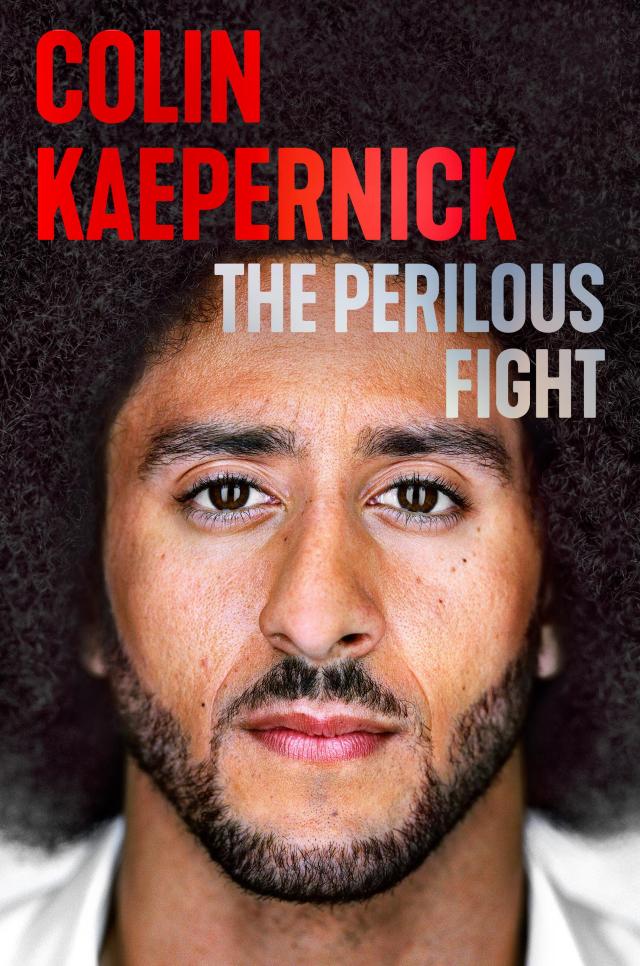
The Perilous Fight
Description:
Ten years after his national-anthem protest changed the conversation around sports and activism, Colin Kaepernick tells the story in his own words. The memoir moves from his childhood as a Black adoptee in Turlock, California, through his rise to the Super Bowl and the political education that reshaped how he understood power, identity, and responsibility. It is less a recap of one famous gesture than an account of how a public stand gets formed—and what it can cost once conviction collides with career incentives.
Author: Colin Kaepernick
Book Length: 288 pages
Release Date: September 15, 2026
Ideal For:
Sports fans, leadership readers, and anyone interested in the tension between personal values, public pressure, and professional risk.
Values are easiest to praise before they carry a price. The useful question is not simply what you believe, but which consequences you have decided you are willing to absorb for acting on it.
|
|
DAILY ACUMEN
Set the Exit Rule Before You Enter
Most bad commitments do not begin as obviously bad decisions. They become bad when the facts change and pride keeps the original decision alive. Once time, money, or reputation is invested, leaving can feel like admitting failure, so people keep funding the plan they already chose instead of reassessing the plan they now have.
A simple defense is to write the exit rule before you commit. Record the premise that makes the decision sensible, the evidence that would weaken that premise, and the date when you will review it. A rule such as “pause this project if paid demand is still below X after 90 days” is much harder to negotiate with than “we will see how it feels later.”
This works for investments, hires, subscriptions, partnerships, and personal projects. The rule does not force you to quit automatically; it forces you to stop and make a fresh decision with current information. Good judgment is not proving that the first call was right. It is noticing early when reality has earned the right to change your mind.
|
|
ENLIGHTENMENT
Free Game Picks
|
|
|
📣 Partner With Us: Get in front of an audience of over 1 million black professionals, business leaders, and policy influencers. Submit a partnership inquiry.
|
|
What'd you think of today's edition?
|
|
|
|

