
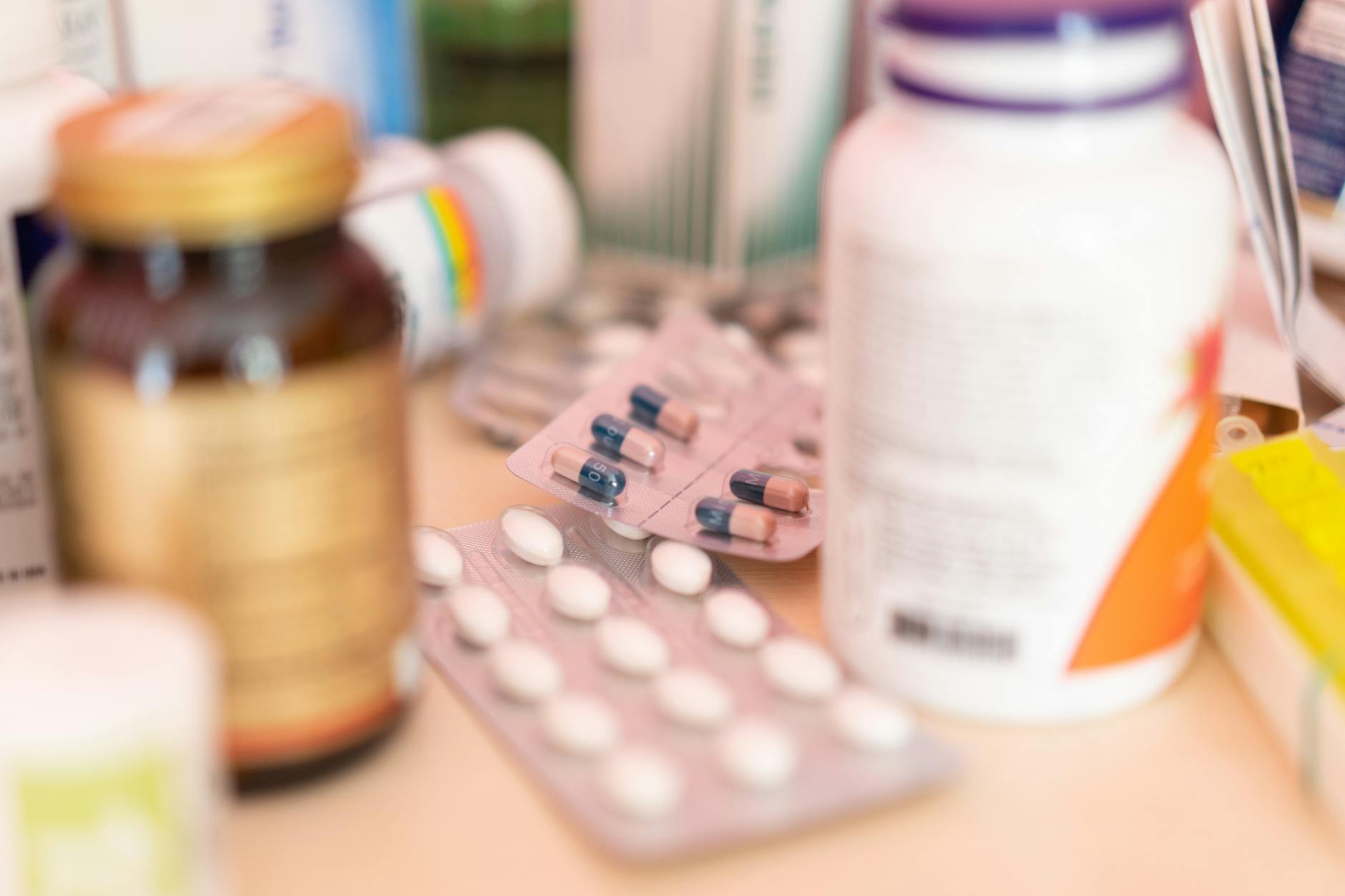
Six days. That is how much notice the American pharmaceutical supply chain got on Thursday night, when President Trump announced on Truth Social that starting October 1, the United States will impose a 100% tariff on any branded or patented pharmaceutical product made by a company that is not, in his words, "BUILDING their Pharmaceutical Manufacturing Plant in America."
The same burst of posts slapped a 50% tariff on kitchen cabinets and bathroom vanities, 30% on upholstered furniture, and 25% on heavy trucks made abroad, all effective the same day. Trump cited national security for the truck and furniture duties and called foreign competition in cabinets a "FLOODING" of the American market.
The drug tariff is the one that matters most, and the fine print of its escape hatch deserves more attention than the headline rate.
According to the president's own posts, a company avoids the 100% levy if it is "building" a U.S. plant, a standard his statements define as having broken ground or having construction underway. Read that carefully. A drugmaker does not need to produce a single pill in the United States to escape the tariff. It needs a construction site. A groundbreaking ceremony, a press release, and some earth-moving equipment now function as tariff insurance for the world's largest pharmaceutical companies.
The industry figured this out months ago. Throughout 2025, as Trump repeatedly threatened pharma tariffs, at one point floating rates as high as 250% that would phase in gradually, drugmakers raced to announce American construction. Eli Lilly has announced plans to spend at least $27 billion on four U.S. plants. Novartis announced a $23 billion U.S. expansion. AstraZeneca announced a roughly $4.5 billion factory complex in Virginia, billed as the largest single investment in its history. AbbVie announced $10 billion in U.S. facilities, and Merck committed $1 billion to build its first American plant for Keytruda, its blockbuster cancer therapy previously made overseas. Reporting at the time explicitly linked several of these announcements to the tariff threat. Those press releases may now be worth more than the concrete.
Then there is what the tariff does not touch. The levy applies to "branded or patented" products, which means generics appear to be exempt, though trade lawyers note the boundary could get blurry for branded drugs that have lost patent protection. The practical effect is that the tariff concentrates its force on exactly the medicines where Americans already pay the most: patented brand-name drugs with no generic competition.
Here is how the cost actually reaches you. Tariffs are paid by the importer at the border, and the United States imported nearly $233 billion in pharmaceutical and medicinal products in 2024. From there, the standard economics of tariffs suggests the cost travels: into the prices wholesalers charge, into what insurers and pharmacy benefit managers pay, and ultimately into premiums, Medicare and Medicaid spending, and out-of-pocket costs. Experts quoted by The Hill have already warned the duties could disrupt supply chains and make some drugs harder and more expensive to obtain. Nobody will ever see a tariff surcharge on a pharmacy receipt. It will simply look like healthcare getting more expensive, the way it always does.
One more wrinkle that most of the initial coverage glossed over. The Supreme Court will hear arguments November 5 on whether Trump can use the International Emergency Economic Powers Act to justify his sweeping country-by-country tariffs, after lower courts ruled against the administration. That case puts the legal foundation of the broader tariff regime in genuine doubt.
But these new duties were built on different ground. The Commerce Department opened Section 232 national security investigations into pharmaceuticals and trucks back in April, and Trump announced a furniture probe in August. Section 232, the same authority behind the steel, aluminum, and auto tariffs, is a more established legal pathway than emergency powers. One reasonable reading of Thursday's announcement is that the administration is deliberately migrating its tariff agenda onto sturdier legal footing before the justices rule. Even if the Supreme Court strikes down the emergency-powers tariffs, the drug, furniture, and truck duties may have been engineered to survive the wreckage.
There are still open questions with real money attached. Trade lawyers note that framework deals with the European Union and Japan may cap pharmaceutical tariffs at 15% for those partners, and Trump offered no details on how the new duties interact with those agreements. The administration has also yet to publish anything defining which companies qualify for the construction exemption, leaving a 100% tax hinging on a list that, as of the announcement, did not exist in public.
What happens next is easy to predict in outline, harder in detail. Companies that have not announced U.S. plants will announce them. Whether those projects ever reach full production is a question nobody will ask at the ribbon-cutting. And American patients will absorb whatever costs remain, quietly, through the same opaque pricing machinery that made American drug spending a political issue in the first place.
Free Game Takeaway
If you take a brand-name prescription, watch your plan's 2026 premium notices and formulary changes over the next two enrollment cycles, because tariff costs that reach insurers tend to surface there first, not at the pharmacy counter. Ask your doctor or pharmacist now whether a generic or therapeutically equivalent alternative exists for any branded drug you take, since generics sit outside this tariff's scope. If you are planning a kitchen or bathroom renovation, get quotes in writing quickly: a 50% duty on cabinets and vanities and 30% on upholstered furniture takes effect October 1, and retailers typically reprice imported inventory within weeks. For investors, the cleanest signal to monitor is which drugmakers have credible U.S. construction underway (Lilly, Novartis, AstraZeneca, AbbVie, and Merck have all announced major projects) versus those still exposed to the full 100% rate, and whether the administration publishes a formal exemption list. Also watch two dates: the Supreme Court's November 5 tariff arguments, which will shape the broader regime, and whatever guidance clarifies whether EU and Japanese pharma keeps its reported 15% cap. The deeper lesson: when a trade policy's exemption can be satisfied with a press release and a groundbreaking, the winners are the companies best at announcing things, and the costs land on people who never see the bill.