
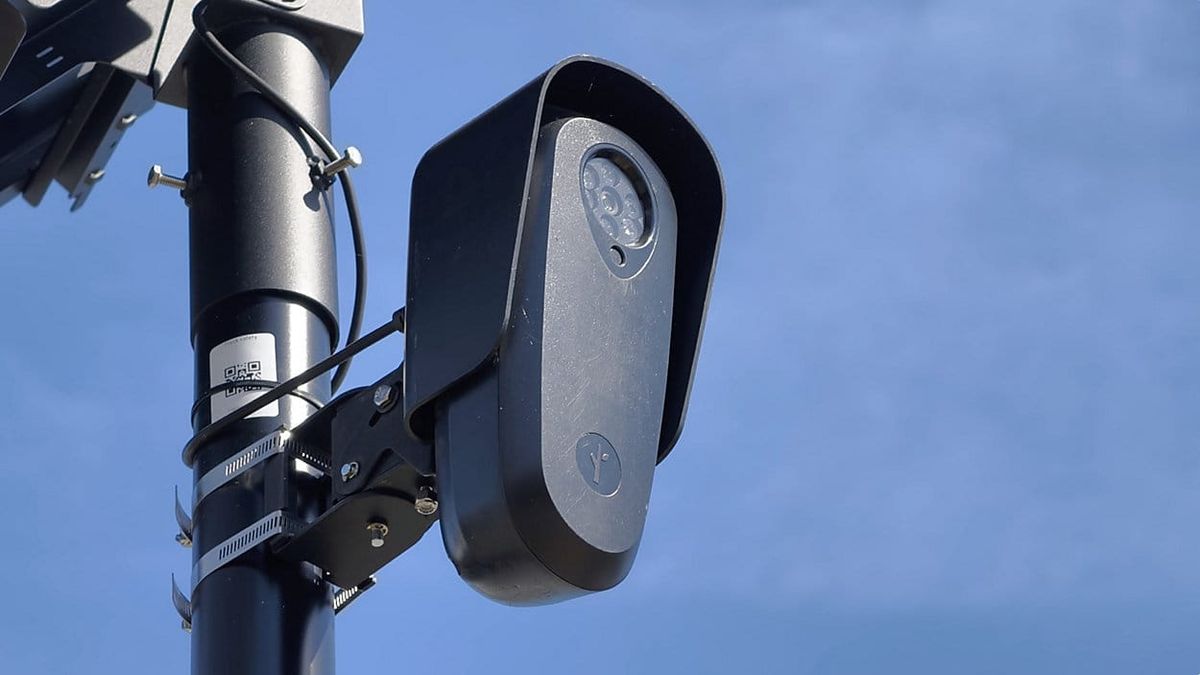
A sheriff's deputy in Georgia searched a single license plate at least 1,146 times over two and a half years. When the system asked him to justify each search, he typed things like "SUSPICIOUS" and, memorably, "BOB."
Nobody at the Richmond County Sheriff's Office noticed. Not in 2023, not in 2024, not for most of 2025. The agency learned about deputy Jose Ferrer's search history in August, when a USA TODAY reporter called to ask about it. Ferrer has since been arrested.
That is the pattern at the heart of the biggest police surveillance scandal in the country right now, and it should reframe how you think about the whole debate. On September 11, USA TODAY reported that at least three more officers were arrested and a fourth fired for abusing Flock Safety's license plate reader network, bringing the total number of police and sheriff's officials arrested, fired, suspended, or investigated because of the outlet's reporting to 22. In nearly every case, the damning evidence was sitting in the department's own audit logs the entire time. The agencies just never looked.
Consider what the new cases actually show. In Fort Pierce, Florida, former officer Josepher Crutchfield was charged with four felony counts after logs showed he searched a woman's plate 189 times over eight months. The woman filed for a stalking protection order days after a reporter told her what the logs contained. She did not know she was being tracked until a journalist informed her. In Albany County, New York, senior investigator Laurie Moore was charged with official misconduct and falsifying business records after searching four plates repeatedly, one of them more than 2,600 times. The sheriff's office determined that plate belonged to Moore's former girlfriend. The county's attorney told USA TODAY, plainly: "We began our investigation after we received your email."
Columbus, Ohio, went further than disciplining one officer. After the Columbus Dispatch asked about officer Melvin Tellis, who searched a single tag at least 272 times for personal reasons, the city fired him, paused its entire 65-camera Flock network, and literally put bags over the cameras while a third-party audit runs. Mayor Andrew Ginther's explanation was striking in its honesty: until he can tell residents the abuse was limited to one or a few people, he said, "I can't with confidence ask them to trust us with this thing."
Zoom out and the scale gets uncomfortable. USA TODAY's underlying investigation analyzed more than 75 million searches across 6,300 agencies over three and a half years, and even that was a fraction of total activity on a network of more than 120,000 cameras in 49 states that scan plates billions of times a month. Reporters flagged 240 users whose search patterns stood out and contacted the agencies behind 67 of them. Roughly half confirmed misuse or opened investigations. In other words, a newsroom running queries on publicly released logs functioned as the de facto internal affairs division for a national surveillance system.
Flock Safety pushes back on this framing, and its counterargument deserves a fair hearing. The company notes that its own new audit tool flagged misconduct in several cases, and it has added safeguards like requiring case numbers for searches and setting a seven-day default for deleting data not tied to an investigation. But the company's marquee example cuts against it. In Covington, Georgia, Flock's tool caught a detective tracking a female coworker 41 times since January. Impressive, until a reporter informed the woman that the full audit history showed at least 2,890 searches going back to June 2023. The tool only reaches back to January 2026, and Flock will not require agencies to use it until next year. Meanwhile, this summer Flock changed what network audit logs display, stripping out the searching officer's name, the plate queried, and the written justification for searches run by outside agencies. Flock told InvestigateTV the changes came at the request of its customer agencies. The result is that the exact records that produced 22 arrests, firings, and investigations are now harder for the public to see.
Then there is the political whiplash, which may be the most consequential part of the story. Florida's DeSantis administration ordered license plate readers pulled from state roads within 30 days, with the governor warning against "a digital AI surveillance state where everything we're doing is being tracked at all times." Texas Gov. Greg Abbott halted state funding for the cameras, in a state that had installed roughly 3,200 of them since 2023 with about $30 million in taxpayer money. In Congress, Republican Reps. Thomas Massie and Eric Burlison have introduced the Flock-Off Act to cut federal dollars from license plate reader purchases. Democrats like Milwaukee County Executive David Crowley are issuing their own restrictions. When Massie and big-city progressives land on the same side of a surveillance fight, something real is happening.
The skepticism is warranted in both directions, though. The Miami Herald reported that before DeSantis banned the readers from state roads, his administration approved about $4.6 million in local agency requests for the technology in connection with immigration enforcement. Governors can discover privacy religion quickly when a scandal is polling badly. Watch whether these restrictions survive the news cycle or get quietly reversed once the headlines fade.
One more thing the national conversation keeps skipping: whose movements get logged most. Researchers at Christopher Newport University mapped roughly 614 Flock cameras across Hampton Roads, Virginia, and found Black neighborhoods experience plate surveillance at nearly four times the rate of white neighborhoods, and 75 percent of high-poverty census tracts contain at least one camera compared to fewer than 40 percent of low-poverty tracts. Civil liberties groups have documented similar placement patterns in Tulsa and Oakland. The stalking cases making headlines involve officers abusing the system for personal reasons, but the everyday burden of the system itself, the billions of routine scans of people suspected of nothing, falls hardest on communities that were already the most heavily policed.
The cameras, it turns out, were excellent at accountability. They recorded everything, faithfully, down to the deputy typing "BOB" into a justification box for the thousandth time. The failure was entirely human: a chain of command that built a machine for watching everyone and assigned no one to watch the people running it.
Free Game Takeaway
You can check whether your own plate has been searched. USA TODAY built a searchable tool from publicly released audit logs, and the independent site HaveIBeenFlocked.com lets drivers query the same records, though recent changes by Flock have stripped officer names, plates, and search reasons from some logs, so coverage is shrinking. Practically speaking: if your city or county uses Flock, find out whether your agency runs regular internal audits or only investigates when a reporter calls, because the record so far suggests most did the latter. Ask your city council three concrete questions: what is the data retention period, is the audit log public record in your state, and has the agency adopted Flock's Audit Assistance tool (which only reaches back to January 2026)? On the political side, watch whether the Florida and Texas restrictions outlast the scandal or get reversed quietly, and watch the Flock-Off Act in Congress, since cutting federal money is the one lever that would force a national standard. For investors watching the surveillance tech space, Flock is private, but the backlash is a live case study in regulatory and reputational risk for any company whose business model depends on government contracts and light oversight: a single newsroom investigation has now cost the company state-level customers in two of the three biggest states in the country.