
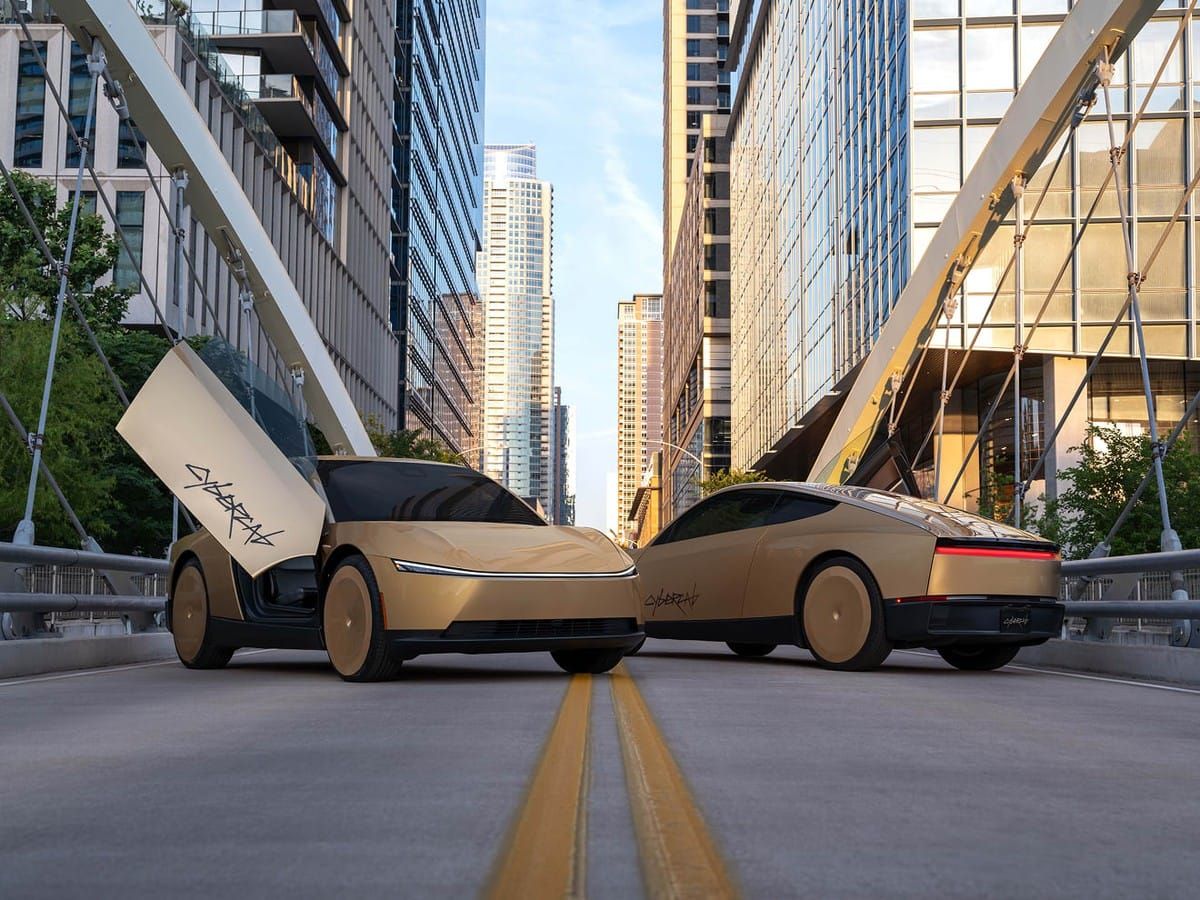
On September 3, Tesla began charging fares for rides in its Cybercab in Austin, Texas, a two-seat vehicle built without a steering wheel, brake pedal, accelerator, or mirrors. That same day, the National Highway Traffic Safety Administration opened Audit Query AQ26002, covering roughly 1,000 Cybercabs, to examine how Tesla concluded the vehicle complies with federal safety law. The agency announced the audit publicly on September 4.
The timing tells you most of what you need to know about how vehicle regulation works in America. Tesla did not wait for approval, because under the U.S. system, it did not have to.
Since 1968, automakers have certified their own compliance with Federal Motor Vehicle Safety Standards, the rulebook known as FMVSS and codified at 49 CFR Part 571. The manufacturer builds the car, decides it meets the standards, and sells it. NHTSA writes the rules and retains enforcement authority, auditing and investigating after the fact. For half a century, that honor system worked tolerably well because every car had roughly the same anatomy: a wheel, pedals, mirrors, a driver. The standards were written around that anatomy. The Cybercab deletes it.
Which raises the question at the center of the audit. In its September 4 statement, NHTSA said it will examine the process and technical data Tesla relied on, including, as the agency put it, the extent to which Tesla's certification depended on determinations that certain FMVSS are inapplicable to the Cybercab. Translated from regulatory English: a large share of the safety rulebook references equipment the Cybercab does not have, and Tesla apparently decided on its own which rules still count. NHTSA has not said the vehicle is unsafe or that Tesla broke the law. It is asking to see the receipts.
The contrast with Tesla's rivals is where this gets interesting. There are two doors into the American market for a car with no driver controls, and they come with very different price tags.
Door one is the exemption route, known as Part 555. Amazon-owned Zoox took it. Zoox received a demonstration exemption in August 2025 under a new pathway NHTSA created for domestically built AVs, and this past July became the first company granted a commercial exemption for a purpose-built, steering-wheel-free robotaxi. The terms were a leash: no more than 2,500 exempt vehicles per year, a sunset date of July 31, 2028, and what NHTSA calls an enhanced, adaptable oversight structure. General Motors tried the same door for the Cruise Origin, petitioning in 2022 for exemptions from six safety standards. An earlier GM petition filed in 2018 spent 15 months under review before the company withdrew it in 2020. Asking permission is slow, capped, and conditional.
Door two is what Tesla did: self-certify and start driving. No production cap. No sunset date. No pre-approval process. The burden of proof flips. Instead of Tesla convincing the government the car is legal before deployment, the government must now build a case that it is not, while the cars carry passengers.
Rob Grant, a former Cruise regulatory executive, laid out the logic before the launch: by self-certifying, Tesla could sidestep the single biggest structural bottleneck that has constrained every purpose-built robotaxi to date, the exemption petition. Whether you read that as clever lawyering or as regulatory arbitrage depends on your tolerance for risk being set by the party that profits from it.
Now consider the regulator's position, because it is genuinely awkward. NHTSA is auditing Tesla under rules the agency itself has acknowledged are outdated. Over the past year it has begun work on eight rulemakings to adapt standards covering brake pedals, windshield wipers, lighting, and rearview mirrors for automated vehicles. It is streamlining the Part 555 exemption process, updating its AV guidance for the first time since 2017, and funding a $5 million consortium to develop the first-ever AV performance standards. Administrator Jonathan Morrison struck the pose of a man straddling two press releases: NHTSA fully supports the safe development and deployment of automated vehicles, he said, but as the federal regulator, the agency needs to ensure that all of its laws are followed.
So the agency is enforcing a rulebook it is actively rewriting, against a company that has already deployed under its own reading of that rulebook. If NHTSA accepts Tesla's interpretation, it hands every automaker a roadmap around the exemption caps Zoox just accepted. If it rejects the interpretation, it faces an enforcement fight, potentially involving recalls or forced exemption applications, over roughly a thousand vehicles already in commercial service, under standards that may not exist in their current form in a few years. Either outcome becomes precedent for the entire industry.
It is worth noting what Tesla's biggest competitor did. Waymo, the Alphabet-owned robotaxi operator, claims more than 200 million miles of real-world autonomous driving and operates in cities from Phoenix to Miami. Its vehicles are conventional cars with conventional controls wrapped in sensors. Waymo avoided this entire fight by keeping the steering wheel, even though nobody touches it. Tesla chose to make the car itself a legal argument.
The audit also lands on a regulator already deep in Tesla's business. Separately, NHTSA has upgraded its investigation of Tesla's Full Self-Driving software to cover about 3.2 million vehicles, including unsupervised robotaxi services in Texas and Florida. And reporting on the Cybercab launch has noted that the service leans on remote operators who can drive the vehicles when the system falters, a detail that complicates the word driverless and one regulators are likely to probe as they weigh which standards apply.
The people of Austin, meanwhile, did not vote on any of this. The passengers climbing into a Cybercab and the pedestrians crossing in front of one are participants in a live test of whether a manufacturer's own legal interpretation is good enough. That has always been true of self-certification, but a defective steering column is a different kind of bet than a car with no steering column at all.
What happens next is simple to describe and hard to predict. NHTSA will review Tesla's certification file and decide whether the company's process holds. Tesla has told the agency it plans to gradually expand Cybercab deployment to more vehicles and more cities. Somewhere in that collision, the rules of the road for every driverless vehicle in America will get written.
Free Game Takeaway
If you live in a city where robotaxis are launching, understand what the safety label actually means: in the U.S., no government agency approved that vehicle before it picked up its first passenger. The manufacturer certified itself, and the audit happens afterward. Watch two specific signals. First, the outcome of Audit Query AQ26002: if NHTSA blesses Tesla's reading of the rules, expect a wave of purpose-built, steering-wheel-free vehicles from other automakers skipping the capped exemption route, which means more unconventional vehicles sharing your streets faster. If NHTSA rejects it, expect recalls, forced exemptions, and a slowdown that tells you the current system has real teeth. Second, watch NHTSA's eight pending rulemakings on pedals, mirrors, wipers, and lighting, because those rules will define what a legal driverless car even is. For anyone tracking Tesla as a business, the Cybercab's entire economics depend on scaling far beyond the 2,500-vehicle annual cap that constrains Zoox, and the self-certification strategy is what makes that scaling possible. An adverse audit finding would push Tesla into the same capped, supervised lane as its rival, while a favorable one removes the biggest regulatory ceiling over its robotaxi ambitions. That asymmetry, combined with the separate FSD probe covering 3.2 million vehicles, makes the regulatory file as important to the Cybercab thesis as anything happening in engineering.