|
| “An investment in knowledge pays the best interest.” — Benjamin Franklin |
|
|
Good Morning! The AI spending boom just got a new poster child: SpaceX is reportedly shopping for $40 billion in debt, not for rockets, but for Nvidia chips. We break down who is lending, what it says about the economics of AI, and why the whole tech sector is now leaning on borrowed money.
Also today: Brent crude settled just above $100 as Middle East tensions simmer, the September jobs report showed hiring nearly stalled with Black unemployment ticking up to 7 percent, and Paramount Skydance finished its $111 billion takeover of Warner Bros Discovery. Let's get into it.
|
|
FREE GAME OF THE DAY
SpaceX is reportedly seeking $40 billion in debt to buy Nvidia chips
 Photo by panumas nikhomkhai on Pexels · Pexels License SpaceX is in talks to borrow $40 billion to fund purchases of more Nvidia chips, according to reporting from Bloomberg and the Financial Times. The package would reportedly split into $10 billion in bank loans and $30 billion in investment-grade debt, with the deal expected to close sometime next year.
The lenders circling the deal are some of the biggest names in private and public credit: Pacific Investment Management, better known as Pimco, and Apollo Global Management are among the firms that could be involved. SpaceX did not respond to requests for comment, per Investopedia.
Wedbush analyst Dan Ives called the move a smart strategic play, arguing it fuels what he described as the flywheel between launch, Starlink, and AI. The logic: Starlink's satellite network generates cash and connectivity, and AI compute layered on top of that network opens new revenue in areas like defense, telecom, and data services.
Context matters here. SpaceX is following a well-worn 2026 playbook. Big tech firms have raised hundreds of billions of dollars this year to build AI data centers, Broadcom is reportedly in talks on a $60 billion fundraising effort that would loan money to customers including Anthropic, and OpenAI is said to be weighing a new round that could value it as high as $1.5 trillion.
The pattern underneath all of these deals is circular: chipmakers and their customers are increasingly financing each other. Nvidia sells chips, its biggest customers borrow against future AI revenue to buy them, and investors are left underwriting the assumption that AI demand will grow fast enough to service all of it.
Markets took the news calmly. SpaceX shares slipped about 2 percent and Nvidia dipped less than 1 percent amid a broadly softer session. Bond investors, with the 10-year Treasury near 5.27 percent, will ultimately decide how expensive this borrowing binge gets.
Free Game Takeaway: Watch the structure, not the headline. When the AI trade runs on $40 billion debt packages arranged by Apollo and Pimco, the risk migrates from stock portfolios to credit markets. If AI revenue disappoints, the bill lands on bondholders, pensions, and insurers first. Diversification across sectors means little when the same AI assumption underwrites everything.
Read the lead source report
|
|
HEADLINES
Top Reads
- 3 years on, Israelis grapple with reports Netanyahu was warned before Oct. 7 attacks (NPR)
- Trump asks Pentagon for Iran strike options before midterms, report says (The Jerusalem Post)
- Oil prices settle down as IEA agrees to accelerate oil stock releases (Reuters)
- Schumer Says Democrats Are on the Edge of Retaking the Senate (Free Game News)
- Billionaire Weston family to buy Boots in $8.9bn deal (Financial Times)
- The Employment Situation, September 2026: Payrolls up 29,000, unemployment at 4.2 percent (U.S. Bureau of Labor Statistics)
- Paramount completes takeover of Warner Bros., giving CEO David Ellison a $150 million payday (Democracy Now!)
- Kalshi touts new transparency initiatives ahead of midterms (Politico)
- S&P 500 scores first record close in 2 months as Magnificent Seven lifts Nasdaq to all-time high (MarketWatch)
- SPAC market update: KOYN to merge with First Digital as October IPO count stalls at two (Boardroom Alpha)
|
|
CAPITAL PULSE
Markets Rundown
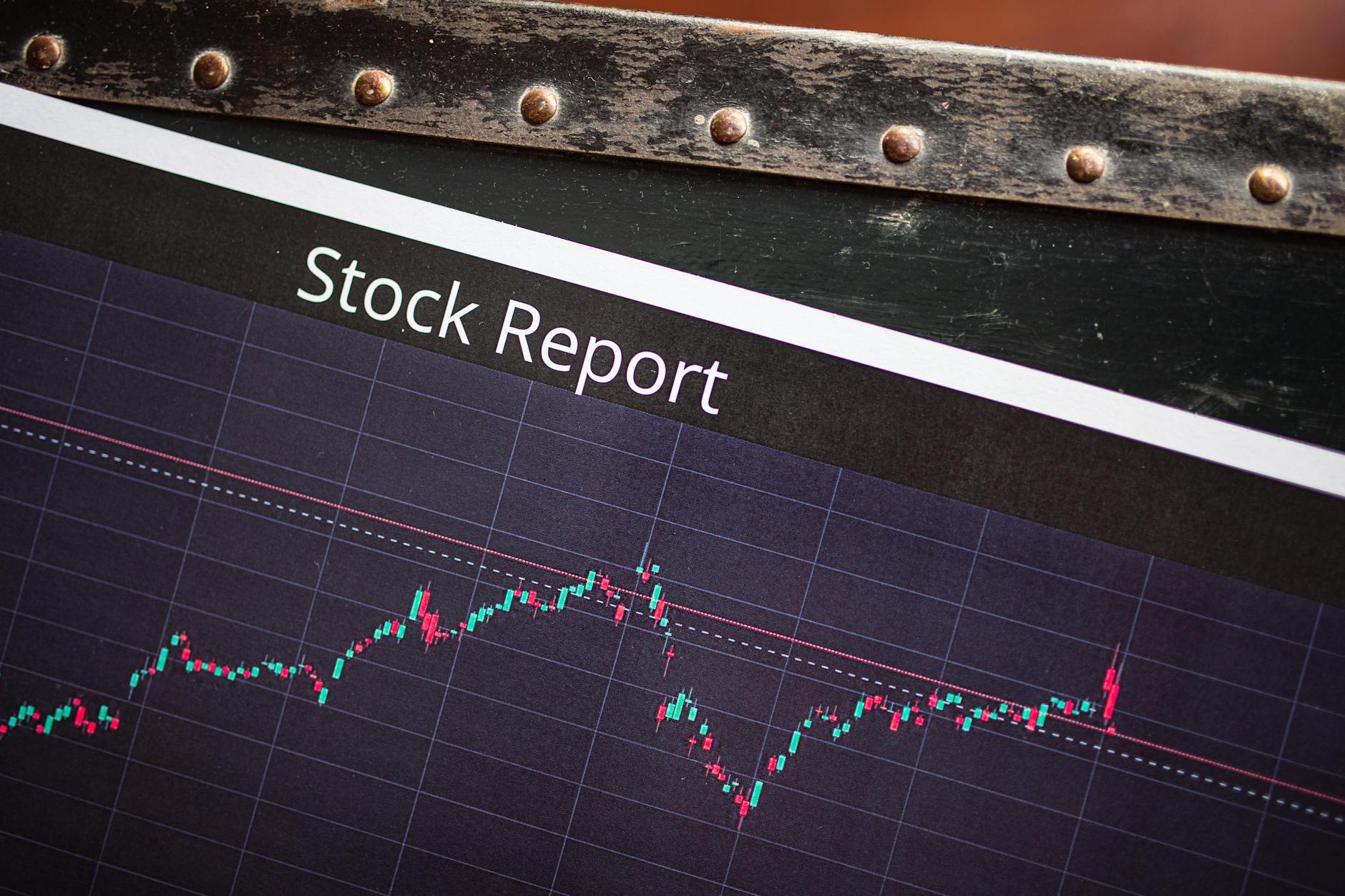 Photo by RDNE Stock project on Pexels · Pexels License
Market Update
- The S&P 500 slipped 0.22 percent to close at 7,801.77 on Wednesday, pausing one day after notching its first record close since August.
- The Dow Jones Industrial Average fell 0.66 percent to 51,179.87, while the 10-year Treasury yield held near 5.27 percent after hitting its highest closing level in 24 years.
Economic Data
- The September jobs report showed payrolls up just 29,000 with unemployment steady at 4.2 percent, while Black unemployment rose to 7.0 percent, evidence of a labor market that has nearly stalled.
Geopolitics and Oil
- Brent crude settled down 0.38 percent at $100.20 a barrel and WTI fell $1.16 after the IEA agreed to accelerate oil stock releases, easing prices even as Middle East supply risks linger.
- A tanker was hit by projectiles north of Qatar with casualties reported, while CENTCOM rejected Iran's claim that the Strait of Hormuz is closed, keeping a geopolitical floor under crude prices.
Movers & Shakers
- SpaceX shares fell about 2 percent and Nvidia slipped less than 1 percent after reports that SpaceX is seeking $40 billion in debt to buy more Nvidia chips.
- Nvidia and AMD touched all-time highs earlier in the week, with Nvidia's market capitalization approaching $6 trillion as AMD's CEO said compute demand continues to outrun supply.
Prediction Markets
- Polymarket traders price a Democratic sweep of Congress at 64 percent four weeks before the November 3 midterms, on roughly $19.9 million in trading volume.
Private Dealmaking
- Canada's billionaire Weston family agreed to buy UK pharmacy chain Boots in an $8.9 billion deal, one of the largest European retail take-privates of the year.
- Paramount Skydance completed its $111 billion takeover of Warner Bros Discovery, folding CNN and CBS News under one roof and delivering CEO David Ellison a $150 million payout.
|
|
BOOK OF THE DAY
The Psychology of Money
Description:
Morgan Housel argues that doing well with money has little to do with how smart you are and a lot to do with how you behave. Through 19 short stories, he explores how greed, fear, luck, and personal history shape financial decisions far more than spreadsheets do. It is a useful lens right now, when $40 billion debt packages and $100 oil make everyone's risk tolerance feel theoretical until it is tested.
Author: Morgan Housel
Book Length: 256 pages
Release Date: September 8, 2020
Ideal For:
Anyone who wants to build wealth steadily and understand why smart people make expensive mistakes.
Reasonable beats rational. A financial plan you can stick with through a crash outperforms a perfect plan you abandon at the worst moment.
|
|
DAILY ACUMEN
Circular risk: when everyone owes everyone
There is a useful mental model for moments like this AI boom: circular exposure. It describes systems where the players finance each other. A chipmaker's growth depends on customers, those customers borrow money to buy chips, lenders underwrite those loans based on the chipmaker's growth forecasts, and the chipmaker sometimes invests in or lends to its own customers. Every leg of the stool leans on the others.
Circular systems look rock solid while the underlying assumption holds, because every participant's success confirms everyone else's. The danger is correlation: when the core assumption cracks, every position fails at once. There is no diversification inside a circle. The housing finance web of 2008 worked the same way; homeowners, lenders, insurers, and rating agencies all depended on one shared belief that prices would keep rising.
The practical takeaway for your own decisions: when you evaluate any investment, employer, or opportunity, ask what single assumption the whole structure rests on. Then ask who else in your life, your portfolio, your industry, your city, depends on that same assumption. The answer tells you your true exposure, which is usually bigger than it looks on paper.
|
|
ENLIGHTENMENT
Free Game Picks
|
|
|
📣 Partner With Us: Get in front of an audience of over 1 million black professionals, business leaders, and policy influencers. Submit a partnership inquiry.
|
|
What'd you think of today's edition?
|
|
|
|

