|
| “This is a defining moment for the industry.” — Gerry Cardinale, Skydance board director |
|
|
Good Morning! Paramount and Warner Bros. Discovery are now one company after Skydance completed an $81 billion takeover on Tuesday. Including assumed debt, the deal approaches $111 billion and combines two century-old studios with HBO, CNN, CBS, Paramount+, HBO Max and some of the most recognizable franchises in entertainment.
Also in today’s edition: Google signs a 20-year nuclear power agreement, consumer confidence falls to its lowest level since 2014, Anduril commits $3.7 billion to a Maryland submarine shipyard, and the Ebola outbreak in the Democratic Republic of the Congo passes 4,100 deaths.
|
|
FREE GAME OF THE DAY
Paramount and Warner Bros. Complete $111 Billion Merger
 Photo by SHAHBAZ ZAMAN on Pexels · Pexels License Paramount completed its $81 billion takeover of Warner Bros. Discovery on Tuesday, creating a combined company called Skydance. Once assumed debt is included, the transaction approaches $111 billion, according to the Associated Press.
The combination puts Warner Bros. Pictures, Paramount Pictures, HBO, CBS, CNN, TNT Sports, Nickelodeon, BET, MTV, Cartoon Network, Food Network, Comedy Central, Paramount+ and HBO Max inside one company. Skydance says its platforms reach more than 200 million streaming subscribers across more than 200 countries and territories.
The scale makes this a story about who controls culture as much as corporate finance. One leadership team will make decisions about theatrical releases, streaming libraries, sports rights and two major television news operations. The company says it plans to release at least 30 films each year with minimum 45-day theatrical windows and produce more than 180 television shows and series.
Skydance enters this new era with nearly $70 billion in annual revenue and a goal of finding at least $6 billion in yearly cost savings within three years. Management says those savings will come from technology, procurement, marketing, integration and real estate as it works toward lower leverage by 2029.
The merger also arrives with promises to protect creative output and editorial independence. A legal settlement requires increased U.S. film production, support for workers displaced by the transaction and a News Editorial Independence Board covering CNN and CBS. Writers, actors and filmmakers will be watching hiring, layoffs, project approvals and licensing decisions for evidence of how those commitments work in practice.
David Ellison leads the company as chairman and CEO alongside co-CEO Ynon Kreiz. Their first decisions will shape a library stretching from Harry Potter and Sinners to Top Gun, The Godfather, SpongeBob SquarePants and live sports carried by CBS and TNT.
Free Game Takeaway: Skydance now controls an unusually large share of American film, television, streaming and news. Watch its decisions on pricing, layoffs, theatrical releases and newsroom independence, because those choices will show how this historic consolidation affects audiences and creative workers.
Read the lead source report
|
|
HEADLINES
Top Reads
- Google enters massive 3.6-GW power deal with Constellation Energy (CNBC)
- Ebola Outbreak: Current Situation (CDC)
- Trump to announce creation of Sparrows Point facility to manufacture submarines (Maryland Daily Record)
- New SNAP Rules Take Effect as Five Million Lose Food Aid (Free Game News)
- Elon Musk Becomes A Trillionaire Again After SpaceX Stock Jumps (Forbes)
- Consumer confidence plunges to lowest level since 2014 (Yahoo Finance)
- OpenAI Targets $30 Billion Mega-Round After Putting IPO Plans on Hold (Yahoo Finance)
- Cox's 'pro-human AI' order directs state government to use 'responsible' artificial intelligence (Utah News Dispatch)
- October 6, 2026 - PBS News Hour full episode (PBS NewsHour)
- What products are part of US-China $60B tariff cuts deal (The Hill)
|
|
CAPITAL PULSE
Markets Rundown
 Photo by Alesia Kozik on Pexels · Pexels License
Market Update
- The S&P 500 rose 0.6% to close above 7800 for the first time, while the Nasdaq and Dow each gained about 0.5%, with the S&P and Nasdaq setting both intraday and closing records on October 6.
- Gold futures rose 1% to $4,195 an ounce, Bitcoin traded near $85,500, and the U.S. dollar index slipped 0.3% to 101.86 as of Tuesday's close.
Economic Data
- The 10-year Treasury yield eased to about 5.28% after touching 5.35% on Monday, its highest level since April 2002, keeping borrowing costs for mortgages and business loans near generational highs.
- The Conference Board's consumer confidence index fell 6.7 points to 81.9 in September, the lowest reading since 2014, with respondents citing high prices and elevated gas costs averaging $4.45 a gallon.
- The Federal Reserve releases minutes from its September meeting, when it hiked rates 25 basis points, on Wednesday at 2 p.m; ET, and traders will parse them for the path of the tightening cycle.
Geopolitics and Oil
- WTI crude rose 0.4% to $89.80 a barrel and Brent rose 0.7% to $101 on Tuesday, as tanker traffic through the Strait of Hormuz increased while traders monitored Houthi attacks on Saudi targets.
Movers & Shakers
- Constellation Energy surged 12% to lead the S&P 500 after announcing a 20-year nuclear power purchase agreement with Google that includes more than $4.3 billion in upgrades across 11 reactors.
- Marvell Technology jumped more than 7% after raising its long-term forecast to about $20 billion in sales next year and up to $90 billion by fiscal 2031, well above Wall Street estimates.
Prediction Markets
- Rate futures imply roughly a 25% chance of another Fed hike in October after September payrolls rose just 29,000 against a 90,000 consensus, with traders looking to December as the more likely trigger point.
Private Dealmaking
- OpenAI is seeking to raise nearly $30 billion at a valuation around $1.4 trillion while delaying its IPO, a round that would put it back above Anthropic's $965 billion private valuation.
- Anduril is investing $3.7 billion in a 2-million-square-foot shipyard at Sparrows Point, Maryland, to build Virginia-class submarines for the Navy under a $2.9 billion contract tied to production outcomes.
|
|
BOOK OF THE DAY
1929: Inside the Greatest Crash in Wall Street History
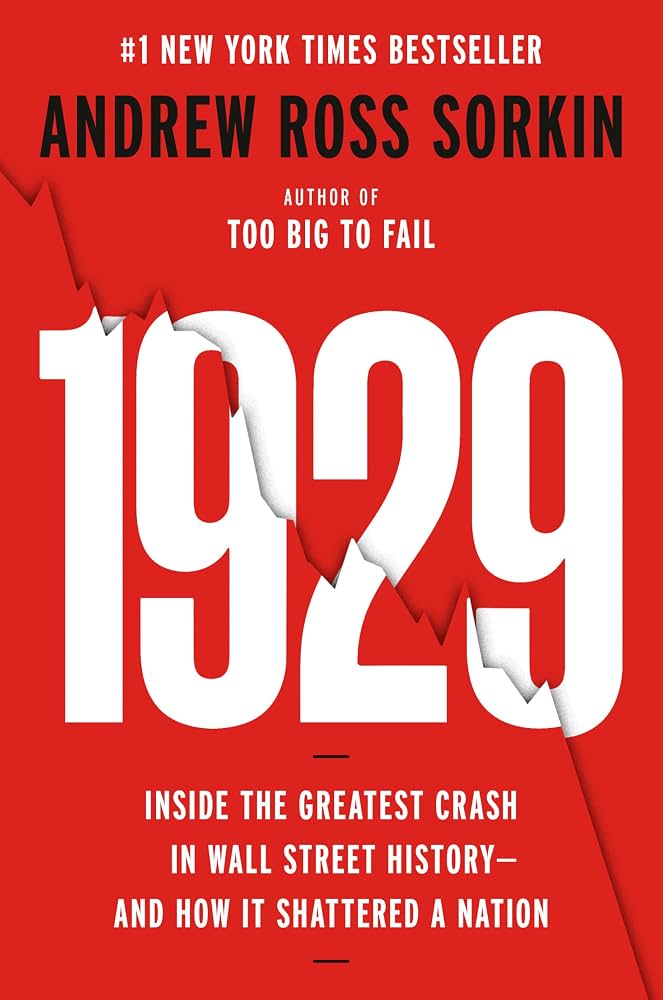
Description:
The New York Times journalist behind Too Big to Fail reconstructs the 1929 crash through the bankers, speculators, and officials who lived it. Sorkin traces how unchecked optimism, leverage, and groupthink turned a boom into a collapse, drawing a detailed portrait of how markets break when everyone assumes they cannot. With stocks at record highs and yields at 24-year peaks, the historical rhymes make this timely reading.
Author: Andrew Ross Sorkin
Book Length: 576 pages
Release Date: October 2025
Ideal For:
Readers who want historical pattern recognition for today's market without a dry economics textbook.
Every era of market euphoria believes its circumstances are unprecedented; the value of studying 1929 is learning how predictable the human behavior behind a crash actually is.
|
|
DAILY ACUMEN
The Bond Seesaw: Why Yields and Prices Move in Opposite Directions
One of the most useful mental models in finance is the bond seesaw: when a bond's yield rises, its price falls, and vice versa. The logic is simple once you see it. A bond pays a fixed stream of interest. If new bonds are issued paying more, your older, lower-paying bond is worth less, so its price drops until its effective return matches the new rate. The two ends of the seesaw always balance.
This is why headlines like today's matter beyond Wall Street. When the 10-year Treasury yield touched a 24-year high this week, it meant investors were demanding more compensation to lend to the U.S. government, and every existing bondholder saw the market value of their holdings shrink. It also meant the hurdle rate for every other investment rose: why take equity risk when a guaranteed 5.3 percent is on the table?
The practical habit is this: when you see a yield quoted in the news, translate it. Rising yields signal tighter money, cheaper bond prices, and pressure on anything whose value depends on future earnings, including growth stocks and housing. Falling yields signal the reverse. Once you internalize the seesaw, a single number in a headline tells you which way a large part of the financial world is tilting.
|
|
ENLIGHTENMENT
Free Game Picks
|
|
|
📣 Partner With Us: Get in front of an audience of over 1 million black professionals, business leaders, and policy influencers. Submit a partnership inquiry.
|
|
|
|

