|
| “A riot is the language of the unheard.”, Martin Luther King Jr. |
|
|
Good Morning! France is under targeted curfews after its worst unrest in years. The images of fires and looting show the damage, while the roots lie in student demands for better schools and a wider movement focused on living costs, fuel prices, wages, budget cuts, and strained public services.
Today we separate the peaceful protest movement from the groups responsible for the violence, explain why claims blaming immigrants are unsupported, and look at what happens next. We also have the latest market moves, a revealing study of how Anthropic employees are using AI agents, and Chip War as today’s book.
|
|
MARKETS
| ▲S&P 500 |
7,712.57 |
+0.28% |
| ▲Dow |
52,495.88 |
+1.02% |
| ▼Nasdaq |
26,424.82 |
fractionally lower |
| ▼10-Year Treasury |
5.10% |
2 basis points |
| ▲Bitcoin |
$82,400 |
slightly higher (24h) |
| ▼GM |
$77.09 |
6.84% |
Data as of US market close, Tuesday, October 20, 2026 (Bitcoin as of roughly 4 p.m. ET). Source: MarketWatch / Investopedia closing data.
|
|
FREE GAME OF THE DAY
Why France Is Rioting
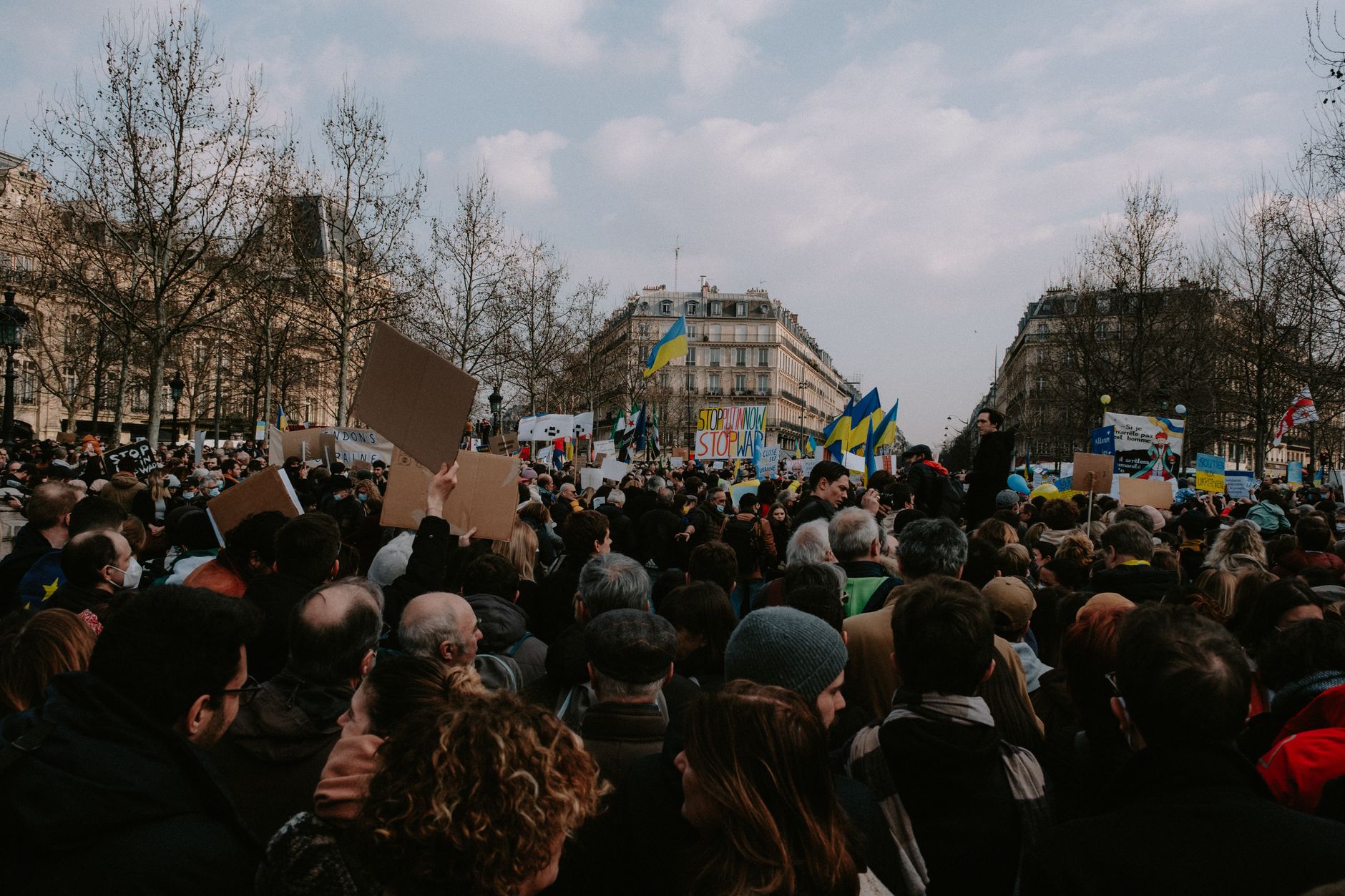 Photo by Mathias Reding on Pexels · Pexels License The unrest in France began last month as a student protest. High school students in the northern suburbs of Paris called attention to teacher shortages, poor facilities, and weak funding. Their complaints soon drew support from parents, university students, and education unions.
The movement widened when labor unions and members of the Yellow Vest movement joined in. Their grievances include rising living costs, expensive fuel, pressure on wages, proposed budget cuts, and declining public services. What began inside schools became a broader argument over whether the French social model is still working for ordinary people.
Most demonstrators were peaceful, but the weekend marches gave way to serious violence in several cities. Masked rioters and opportunistic looters burned cars, attacked public buildings, damaged stores, and clashed with police. French officials cite some organized far left groups and opportunistic looters among those responsible. Claims tying the unrest to immigrants or any religious group remain unsupported by official evidence.
The scale of the damage explains the government response. At least 2,400 people were arrested after the weekend unrest, and authorities say more than 3,000 shops were damaged or looted. Targeted curfews are now in effect in parts of Paris and Lyon, while Marseille has imposed a curfew for unaccompanied minors.
Prime Minister Sébastien Lecornu is promising a much larger security presence for the next protests. France deployed 60,000 officers during the weekend, and soldiers are being assigned to protect sensitive sites so more police can focus on crowd control.
The deeper problem is that France has little financial room to answer the demands. Public debt stood near 119 percent of economic output at the end of June, government spending already accounts for more than half of the economy, and higher bond yields are making that debt more expensive. More school funding and relief from living costs require money the government is struggling to find.
The immediate test comes Saturday, when student groups and Yellow Vest organizers plan to demonstrate again. Unions have also called for strikes on November 5. With a presidential election next year, the fight over public services, household costs, security, and political responsibility is likely to shape France long after the streets calm down.
Free Game Takeaway: The full story begins with specific complaints about schools, household costs, wages, and public services, while smaller groups turned parts of the demonstrations into riots. Watch whether the government can address those complaints without worsening its budget crisis, and whether the next protests remain peaceful.
Read the lead source report
|
|
HEADLINES
Top Reads
- GM beats Q3 estimates, tightens its profit outlook, and unveils a $20 billion buyback, and the stock still sinks (Yahoo Finance)
- Netflix reports Q3 results after the bell with its stock already down about 25% this year (Yahoo Finance)
- Microsoft pulls out of Nscale's flagship UK data center deal over power supply issues (The Wall Street Journal)
- Connecticut's New AI and Privacy Laws Take Effect October 1 (Free Game News)
- HSBC CEO warns the AI boom won't make every data center a good bet (CNBC)
- Oil prices fall as traders hope for diplomatic progress between the U.S. and Iran (CNBC)
- U.S. pending home sales tumble to a record low in September (Reuters)
- Apple unveils the new Apple TV 4K with a full screen Siri AI experience (Apple Newsroom)
|
|
CAPITAL PULSE
Markets Rundown
 Photo by Rafael Minguet Delgado on Pexels · Pexels License
Economic Data
- Pending home sales plunged 7.3% in September from August and 11.3% year over year, hitting the lowest reading since tracking began in 2001 as the 30 year mortgage rate hovered near 7.43%.
- Housing starts fell 4.56% to an annualized 859,000 units in September, adding to evidence that high borrowing costs have frozen both buyers and builders.
Geopolitics and Oil
- WTI crude fell 2.5% to $101.10 a barrel, snapping an eight session winning streak of more than 20%, after reports that mediators were working to bring the U.S. and Iran to talks on ending the Middle East conflict; Brent slipped to about $109 after touching its highest level since mid May.
Movers & Shakers
- General Motors fell roughly 7% despite beating Q3 estimates with $50 billion in revenue and a new $20 billion buyback, because it tightened rather than raised its full year profit outlook.
- 3M jumped almost 6% to lead the Dow, defense contractors RTX and Northrop Grumman rose 0.7% and 4.5%, GE Aerospace fell about 3.5% after earnings, and CoreWeave recovered to close up 1.7% after an early 5.5% drop following last week's 25% plunge.
Prediction Markets
- Rate traders have largely priced in an October Fed pause and shifted their bets to the December meeting scheduled for December 8 and 9, aligning with the unanimous December hike call in the new Reuters economist poll.
Private Dealmaking
- Microsoft walked away from anchoring Nscale's flagship UK data center project over power supply delays, a high profile sign that electricity access is now a binding constraint on AI infrastructure deals.
- HSBC CEO Georges Elhedery cautioned that the AI borrowing spree will leave winners and losers in data center financing, warning that the boom will not make every project a sound bet.
|
|
LATEST IN AI
Anthropic's Inside Look at How AI Agents Are Reshaping Its Own Workforce
Anthropic published a detailed study of how AI adoption has restructured work inside its own company, offering a rare data driven preview of what other workplaces may face. By August, interactive AI agent hours inside Anthropic outnumbered employee hours six to one, and the company reports producing more code per person, closing more sales per rep, and processing more contracts as agents spread through its workflows.
Free Game Takeaway: The durable career lesson from Anthropic's own data: routine execution work is what agents absorb first, so the skills gaining value are judgment, supervision of automated output, and the ability to direct systems rather than perform tasks line by line. If your role involves reviewing, deciding, and prioritizing, lean into that and document it.
Read the source report
|
|
BOOK OF THE DAY
Chip War
Description:
Chris Miller traces how semiconductors became the foundation of economic power, military capability, and nearly every modern industry. The book connects chip design and manufacturing to the competition among the United States, China, Taiwan, Korea, and Europe, turning a complex supply chain into a gripping geopolitical story.
Author: Chris Miller
Book Length: 464 pages
Release Date: October 4, 2022
Ideal For:
Readers who want to understand why chips sit at the center of AI investment, industrial policy, and global competition.
The most valuable technology businesses often depend on a handful of hidden bottlenecks. To understand where power and risk really sit, follow the critical components that cannot be replaced quickly.
|
|
DAILY ACUMEN
Anchoring: Why the First Number Wins
Anchoring is the cognitive bias where the first number you hear in a negotiation or decision quietly becomes the reference point for everything that follows. Tell a homebuyer a house listed at $900,000, and $850,000 feels like a bargain even if the neighborhood comps say $800,000. The initial figure drags your judgment toward it, whether or not it is relevant or accurate.
You can see anchoring everywhere in this week's news. GM tightened its profit guidance but kept the same midpoint, and the stock dropped 7% anyway because investors had anchored on the possibility of a raise. Rate traders anchored on an October pause months ago, so the Fed's real market moving moment now lands in December.
Use the bias deliberately. In negotiations, naming the first number, when you have done your homework, sets the range in your favor. When you are the one receiving an anchor, pause and ask what the number would be if you had never heard it. Generating your own independent estimate before looking at someone else's figure is one of the most reliable debiasing moves researchers have found.
|
|
ENLIGHTENMENT
Free Game Picks
|
|
|
📣 Partner With Us: Get in front of an audience of over 1 million black professionals, business leaders, and policy influencers. Submit a partnership inquiry.
|
|
What'd you think of today's edition?
|
|
|
|

