
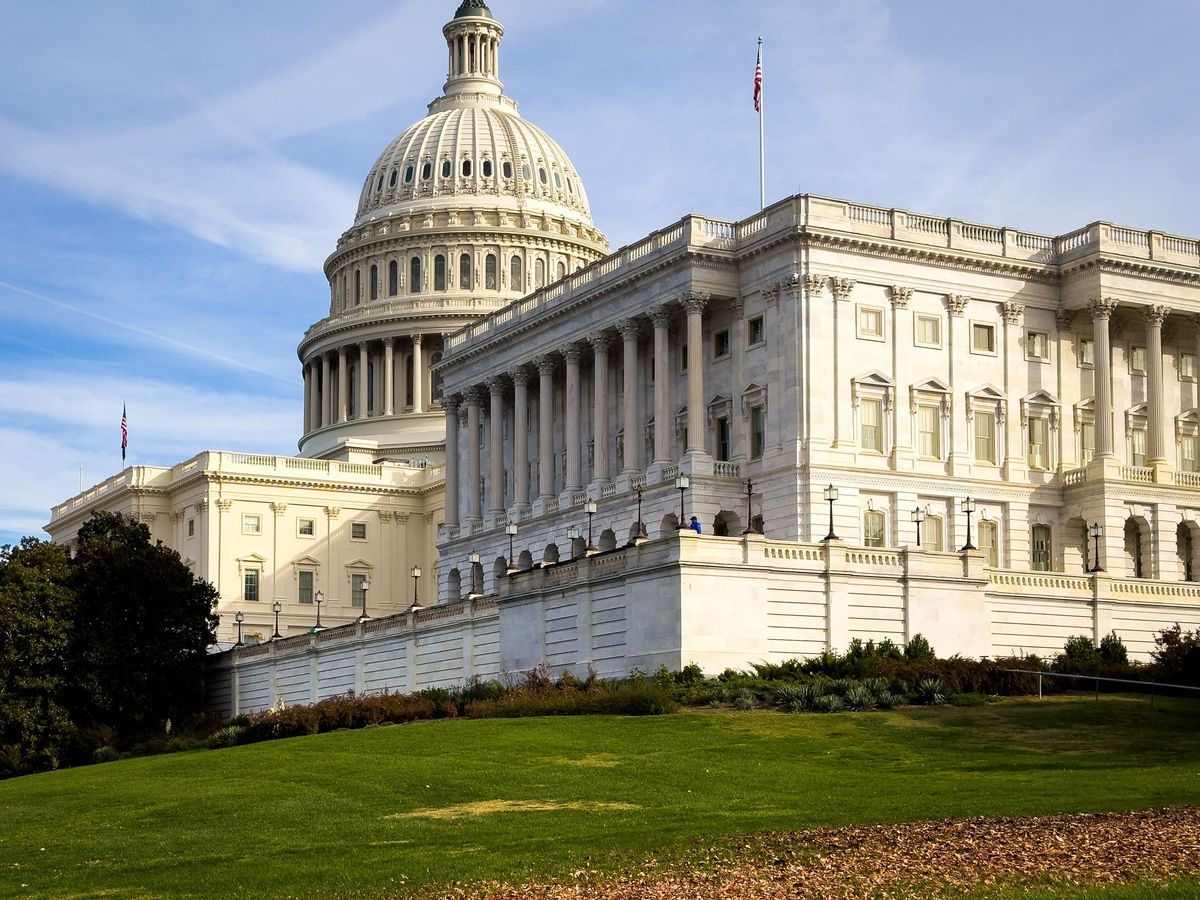
On a single Wednesday in September, Washington did two things that will show up in the same household budget. The Federal Reserve raised interest rates for the first time in more than three years, citing spiraling oil prices. And the House of Representatives voted 262 to 159 to pass the Lindsey O. Graham Sanctioning Russia and Iran Act of 2026, a bill that sanctions Moscow's war machine and, in the fine print, hands President Trump authority to slap tariffs of up to 100% on countries that keep buying large volumes of Russian oil and gas.
The bill now goes to Trump's desk, and he has said he will sign it. It is the most substantial Ukraine-related legislation of this Congress, and the first bipartisan Ukraine measure since the April 2024 aid package. It is also something else: a voluntary surrender of trade power by the branch of government that the Constitution gives it to.
Start with what the bill genuinely does for Ukraine. The 61-page measure imposes primary and secondary sanctions on Russian officials, oligarchs and their family members, banks and financial institutions, the energy and defense sectors, and the 'shadow fleet' of tankers Russia uses to dodge existing sanctions. At Trump's request, it also extends sanctions authority aimed at Iran's weapons and energy funding. It passed the Senate 86 to 11 in August, with the chamber erupting in applause as Graham's sister Darline, appointed to fill his seat after his sudden death in July at 71, read the final tally. Graham announced a deal with the White House on July 10 in Kyiv. He died the next day. His colleagues finished the bill as a memorial.
Ukraine's backers are right that the pressure is needed. Foreign Policy reports the European Union has passed 21 sanctions packages since the war began, while the Trump administration has actually relaxed some existing Russia sanctions to ease oil market pressure from the Iran war. Congress stepping in, on paper, corrects that.
Now the part that split the Democratic Party down the middle. The bill lets the president impose tariffs of up to 100% on goods from the five largest buyers of Russian crude or gas and the top five facilitators of Russian sanctions evasion, and lets him lift those tariffs at his own discretion. China and India are the obvious targets. Reuters notes the net could also catch Japan and some European Union countries, meaning the same tool aimed at Moscow's customers could be turned on America's allies.
Fifty-eight Democrats and one independent joined 203 Republicans to pass it. One hundred fifty-two Democrats voted no, and their reasoning had nothing to do with going easy on Putin. 'White House lawyers drafted the current text to maximize President Trump's authority to impose new import taxes on the American people, and to minimize any obligation to actually impose new sanctions on Russia or its enablers,' said Rep. Gregory Meeks, the top Democrat on the House Foreign Affairs Committee. House Minority Leader Hakeem Jeffries put it in kitchen-table terms: 'Life is way too expensive in the United States of America. Why in the world would this Congress or the People's House give this president unfettered authority to visit more tariffs on the world that will have an adverse economic impact on the American people?'
Meeks tried to fix it. The House Rules Committee record shows he offered an amendment to strike the broad secondary tariff authority entirely. It was defeated 3 to 7. A Hoyer amendment to name the specific countries subject to tariffs, defeated. A Meeks amendment requiring that sanctions waivers be 'vital to the national security of the United States,' defeated. The bill then went to the floor under a closed rule with no amendments allowed. The Senate had already rejected a Rand Paul and Ron Wyden amendment to strip the tariff powers, with Paul, the lone Senate Republican no vote, likening tariffs to taxes on American consumers. Democratic Sen. Raphael Warnock said he extracted a written commitment from U.S. Trade Representative Jamieson Greer to put guardrails on the tariff authority. A letter from a trade representative is a promise, and promises from political appointees have a way of expiring.
Notice the asymmetry Meeks flagged, because it is the whole game. The sanctions on Russia come with presidential waiver authority. The tariffs on everyone else come with presidential discretion to impose and to lift. So the president holds a carve-out for Moscow and a cannon for New Delhi, Beijing, and possibly Tokyo and Brussels. One possible explanation for that design is straightforward: it converts Congress's desire to punish Russia into a standing source of presidential leverage over every trading relationship in the world, usable for purposes that have nothing to do with Ukraine.
And consider the economic moment this lands in. AAA data shows diesel hit a record $6.23 a gallon on September 14. Brent crude pushed back above $100 in early September for the first time since July, driven by the escalating Iran war. Hours before the House voted, the Fed raised its benchmark rate a quarter point to a range of 3.75% to 4%, a unanimous 12 to 0 decision, and projected that most officials expect at least one more hike this year. The ten-year Treasury yield crossed above 5% this week, its highest level since 2007. Every one of those numbers feeds the same pipeline into consumer prices, freight costs, and grocery bills, less than two months before midterm elections.
Tariffs work the same way. However the White House brands them, the importer of record at the American port pays the tariff, and the evidence of the past several years is that the cost travels downstream to buyers. A 100% duty on Indian or Chinese goods, imposed in the name of Ukrainian sovereignty, would be paid in Ohio and Georgia, in the middle of an energy-driven inflation spike the Fed just moved to fight.
None of this means the bill is a fraud. The Russia sanctions are real, the shadow fleet provisions matter, and Democrats like Rep. Dan Goldman voted yes on the logic that Trump has done 'next to nothing' economically against Russia and the bill 'demands he do exactly that.' Ukraine's government cheered the vote. The honest read is that Congress bought a sanctions package and paid for it with a tariff blank check, on the theory that this president will aim the check at the right targets and leave it holstered otherwise. The text of the bill, and the amendments its authors defeated, suggest they knew exactly what they were handing over.
Free Game Takeaway
Watch two things now. First, whether Trump actually uses the tariff authority against India or China after signing, and whether the 'guardrails' Jamieson Greer promised Senator Warnock in writing ever take binding form. If 100% tariffs land on Indian or Chinese imports, expect another leg up in prices for electronics, apparel, pharmaceuticals, and machinery on top of fuel costs already at record levels. Small businesses that import goods should scenario-plan landed costs with a doubling of duties on affected sourcing, and consider accelerating orders or diversifying suppliers before any announcement rather than after. Second, watch the waiver side: if the administration waives or slow-walks the Russia sanctions while keeping the tariff threat alive, that confirms Meeks's warning that the bill functions more as a trade weapon than a Ukraine weapon. For anyone with investments, the companies most exposed are import-heavy retailers, automakers, and freight-dependent industrials already squeezed by $6.23 diesel and a Fed that just signaled at least one more rate hike. The broader lesson outlasts this bill: emergency delegations of trade power to the executive branch rarely come back. Congress has now done it twice in one year, on a bipartisan basis, and voters paying the tariff at the register will have no one to call, because their own representatives voted for it.