|
| “The arc of the moral universe is long, but it bends toward justice.” — Rev. Dr. Martin Luther King Jr. |
|
|
Good Morning! Amazon agreed to pay $8.25 million to settle D.C.'s case over slower Prime delivery in ZIP codes serving majority-Black Wards 7 and 8. About 69,000 customers are eligible for refunds, and the agreement adds disclosure rules for future neighborhood-level delivery exclusions. That's our lead.
Elsewhere, the Nasdaq closed at a record while the 10-year Treasury yield pushed toward 5.3%, Wall Street banks started syndicating a record $60 billion financing package tied to Anthropic's chip needs, the federal shutdown hit day six, and prediction markets now lean hard toward the Fed holding rates steady this month. Let's get into it.
|
|
FREE GAME OF THE DAY
Amazon pays $8.25 million after charging Black D.C. neighborhoods full price for slower Prime delivery
 Photo by Joshua Brown on Pexels · Pexels License Amazon has agreed to pay $8.25 million to settle a lawsuit brought by D.C. Attorney General Brian Schwalb over Prime delivery service in the District's majority-Black Wards 7 and 8. Under the settlement, Amazon will refund $7.25 million in subscription fees to affected customers and pay $1 million in penalties to the District.
The attorney general's office accused Amazon of secretly excluding residents in those two wards from the fast delivery Prime promises, while still charging them the same membership fees as customers elsewhere in the city. Roughly 69,000 Prime members are expected to receive refunds.
The mechanics matter here. According to the AG's office, Amazon shifted deliveries in these neighborhoods away from its fastest options without telling the customers paying for them. People east of the Anacostia River were buying the same product on the same terms and receiving a slower version of it.
The AG's office said Amazon ceased excluding Ward 7 and 8 consumers from full delivery services in April of this year. The settlement formalizes refunds for the period when the slower service was in effect and adds a civil penalty on top.
This case is a concrete test of how consumer protection law applies to delivery systems. Companies routinely adjust logistics by ZIP code for cost, efficiency, and safety. D.C.'s case centered on Amazon charging full price for a premium service while quietly reducing that service in specific neighborhoods, with the impact concentrated on Black consumers.
For D.C. residents in the affected ZIP codes, the practical next step is watching for refund eligibility notices tied to their Prime accounts during the covered period.
Free Game Takeaway: Companies that charge one price for a premium service must clearly disclose neighborhood-level reductions. Keep your receipts and compare promised delivery windows with actual performance. Consumer protection law applies to digital logistics systems just as it applies to storefronts.
Read the lead source report
|
|
HEADLINES
Top Reads
- Nasdaq notches record high close as investors focus on earnings and dip in oil prices (Reuters)
- Wall Street tests lender appetite with record $60 billion Broadcom-Anthropic chip financing (Yahoo Finance / Investing.com)
- AI Executives Testify Under Oath Before New York City Council (Free Game News)
- Schneider Electric to acquire PTC in $22.6 billion all-cash industrial software deal (Schneider Electric)
- KKR to acquire Gen II Fund Services for more than $5 billion (Yahoo Finance)
- Oil steadies after 2% drop as rising Gulf exports and Saudi price cut point to looser market (Bloomberg)
- Prediction markets favor the Fed holding rates steady in October (Benzinga)
- Government shutdowns carry measurable costs for workers and the economy (Brookings)
- EBONY names its 2026 Power 100 across culture, business and technology (Atlanta Daily World)
- Aaron Pierre's John Stewart takes center stage in the Lanterns finale (TheGrio)
- Anthropic commits $100 million to train 10,000 enterprise AI engineers (Anthropic)
|
|
CAPITAL PULSE
Markets Rundown
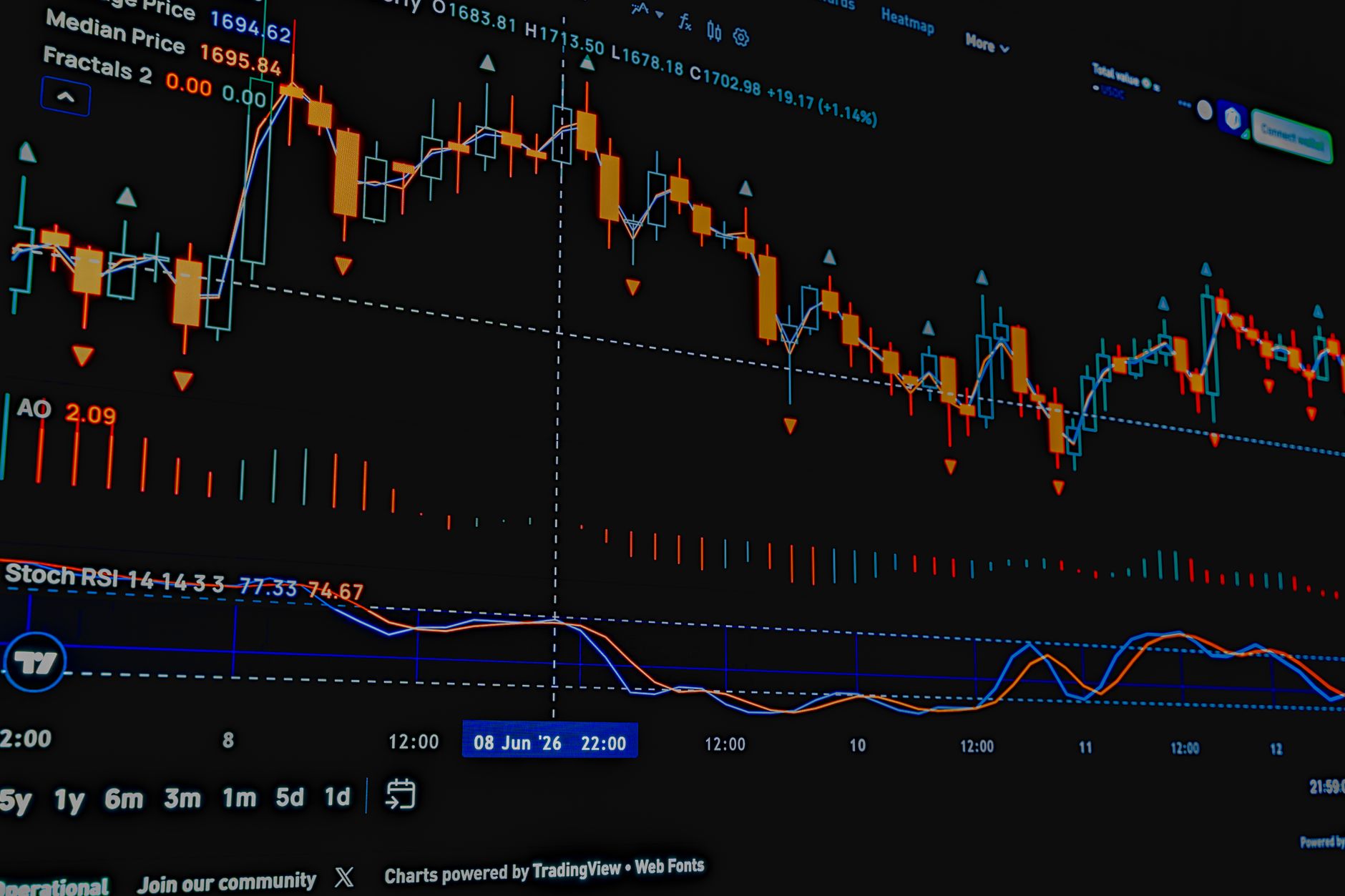 Photo by Rafael Minguet Delgado on Pexels · Pexels License
Market Update
- The Nasdaq Composite closed at a record high Monday, gaining about 1%, while the S&P 500 rose 0.7% and the Dow added 0.2%, with investors shrugging off rising bond yields ahead of Q3 earnings season.
- The 10-year Treasury yield climbed 3 basis points to 5.31%, near its highest level since 2002, even as stocks rallied on pared-back expectations of another Fed rate hike.
Economic Data
- The ISM services index showed activity expanding at a slower pace in September, falling to 54.9 from 55.4 in August, while its prices index rose to 74, signaling fresh cost pressure.
- September payrolls grew by just 29,000, well below expectations, with the prior two months revised down by a combined 60,000 and unemployment edging up to 4.2%, according to Friday's jobs report.
Geopolitics and Oil
- Oil steadied near $101 a barrel for Brent after losing about 2% Monday, as rising Persian Gulf exports and a Saudi price cut pointed to a looser market.
- OPEC+ decided on October 4 to hold November required production at September levels, leaving output unchanged as the Brent-WTI spread stays above $11 on maritime risk premiums around the Strait of Hormuz.
Movers & Shakers
- Nvidia hit an all-time high Monday with a market value near $5.7 trillion, leading the Nasdaq's record session alongside Microsoft.
- Boeing shares ticked higher after the FAA said a 737 MAX software glitch poses no flight safety risk, a decision Jefferies said could clear the way for MAX 10 certification by year-end.
Prediction Markets
- Polymarket traders now assign roughly an 81% probability that the Fed holds rates steady at its October 28-29 meeting, with a 25-basis-point hike near 19%, after soft September jobs data cooled tightening bets.
- Kalshi traders cut the odds of an October Fed hike from 64% to 27% in a week after New York Fed President John Williams said policymakers have time to gather more information and face no urgency.
Private Dealmaking
- Bank of America, Citigroup, and Morgan Stanley have begun syndicating a record $60 billion debt package backing Anthropic's chip lease arrangement, a deal seen as a test of debt-market appetite for AI infrastructure.
- KKR agreed to acquire private capital fund administrator Gen II Fund Services for more than $5 billion in a deal announced October 5.
- Schneider Electric agreed to buy industrial software maker PTC for $205 per share in cash, valuing PTC's equity at about $22.6 billion, a 42.3% premium to its last closing price.
|
|
BOOK OF THE DAY
The Sum of Us: What Racism Costs Everyone and How We Can Prosper Together
Description:
Economist Heather McGhee travels the country examining how zero-sum thinking about race has shaped American policy on everything from public pools to wages, and documents what she calls the Solidarity Dividend: the gains that show up for everyone when communities cooperate across racial lines. It pairs directly with today's lead story, because it explains exactly how systems quietly deliver less to Black communities while charging everyone the same price, and what fixing that actually returns.
Author: Heather McGhee
Book Length: 448 pages
Release Date: February 16, 2021
Ideal For:
Readers who want a reported explanation of the economic machinery behind stories like the Amazon settlement.
Discrimination carries a price tag that gets billed to the whole economy, and the settlements that make headlines are usually the visible tip of a much larger invoice.
|
|
DAILY ACUMEN
Goodhart's Law: when a measure becomes a target
In 1975, economist Charles Goodhart observed that once a measure becomes a target, it stops being a good measure. The idea is simple: the moment you reward or punish people based on a number, they will find ways to move the number that have nothing to do with the thing you actually care about.
You see it everywhere. Schools judged on test scores start teaching to the test. Customer service teams measured on call length rush complicated problems. Delivery networks optimized for cost per package reroute service away from neighborhoods where delivery costs more, which is the kind of pressure that produced the gap at the center of today's lead story. The metric improves while the customer experience declines.
The practical use is a two-question habit. First, whenever someone shows you a number that looks great, ask what behaviors that number rewards and whether those behaviors match the goal. Second, pair every quantitative target with a quality check tied to the real outcome. Numbers are tools for seeing. Use them alongside judgment so people perform for the mission.
|
|
ENLIGHTENMENT
Free Game Picks
|
|
|
📣 Partner With Us: Get in front of an audience of over 1 million black professionals, business leaders, and policy influencers. Submit a partnership inquiry.
|
|
What'd you think of today's edition?
|
|
|
|

